
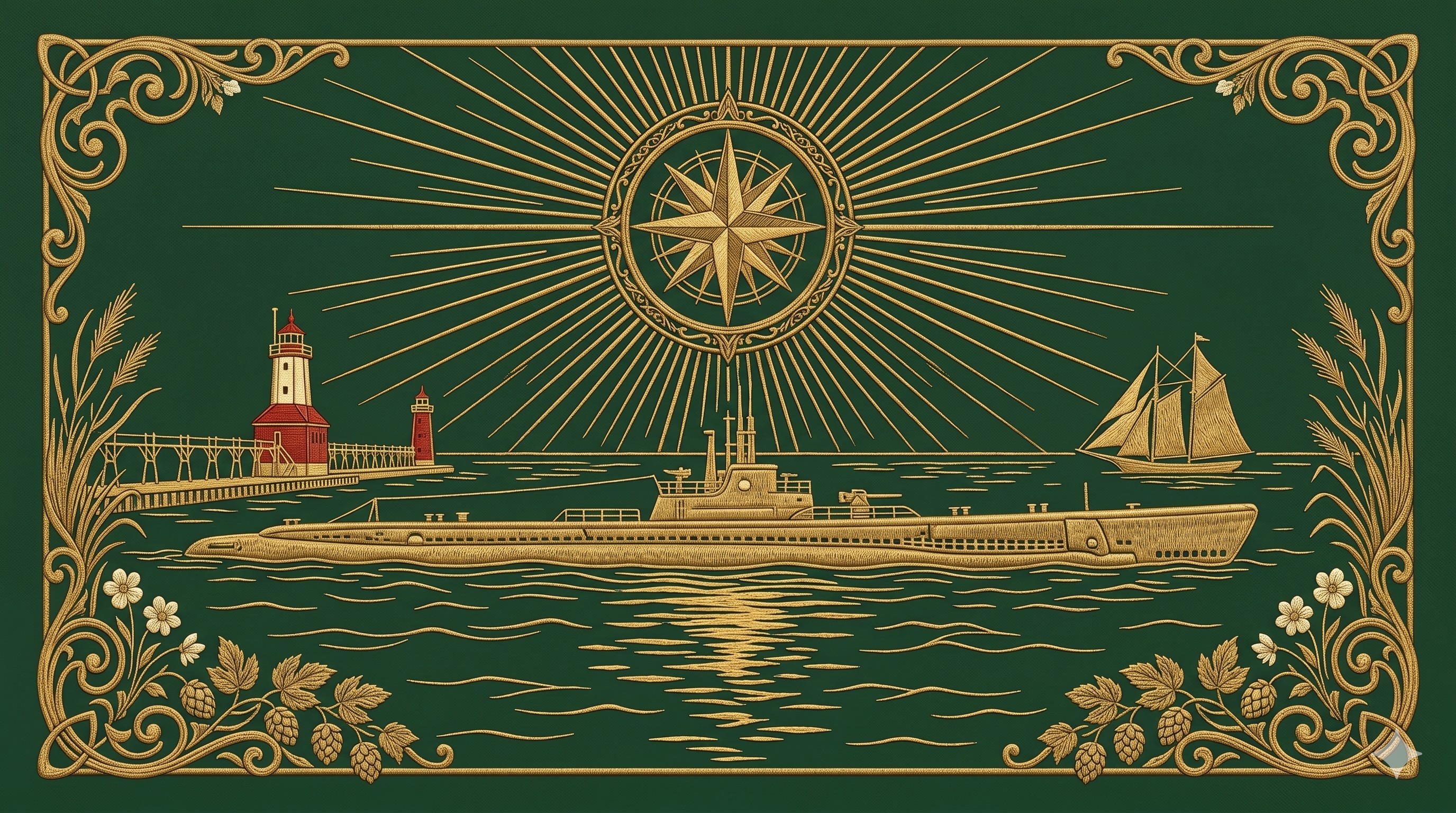
Muskegon
A city that built America’s lumber supply, saved a WWII submarine from a Chicago scrapyard, and cleaned 110,000 tons of sawdust off the bottom of its lake to start over. West Michigan’s most interesting shore city.
Lumber Queen. Beer Tent Capital. Shore City.
In 1887, Muskegon’s 50 sawmills cut 665 million board feet of lumber in a single year. Ships loaded up to 30 daily and carried the wood to Chicago and the rest of the Midwest. Muskegon had more silk hats per capita than anywhere in the United States. The city was called the Lumber Queen of the World, and it meant something — the forests were so thick that lumberjacks had to crawl their way through the old-growth to reach the trees.
Then the forests ran out. The mills closed. The lumber barons mostly took their wealth and left. Muskegon spent the better part of a century figuring out what it was after lumber — foundries, manufacturing, chemicals, tourism, healthcare. The Muskegon Lake filled up with sawdust and industrial debris until no one swam in it anymore. The waterfront went industrial, then derelict.
What’s happened in the last decade is real. The county dredged 110,000 tons of mill debris from the lakebed and the water came back. Heritage Landing — a former scrapyard — became the region’s best outdoor concert venue. The Downtown Social District, launched in 2020, lets you carry a drink from bar to bar across Western Avenue. The Lakeshore Art Festival fills 8 blocks of downtown every June. Pere Marquette Beach is one of the cleanest in the country. And the USS Silversides — a WWII submarine rescued by a small group of Muskegon residents who refused to let it rust at a Chicago naval pier — sits in the Muskegon Lake channel as the most unusual museum in West Michigan.
Muskegon has four nicknames: Lumber Queen of the World, Port City, Riviera of the Midwest, and Beer Tent Capital of the World. It earns every single one.
Detroit owns the grit. Grand Rapids owns the craft. Lansing owns the bet. Ann Arbor owns the classroom. Traverse City owns the view. Ferndale owns the wink. Bay City owns the river. Port Huron owns the crossing. The Thumb Coast owns the quiet. And Muskegon owns the shore.
Muskegon’s Cannabis Market
A market with real range — boutique independents, social equity operators, and premium chains all competing for the same Lake Michigan shoreline customer.
31 Cannabis — Muskegon
When 31 Cannabis opened its Park Place location, it became West Michigan's first locally owned and operated recreational dispensary — a distinction that matters in a market where most of the competition is chain-owned. The location is minutes from Pere Marquette Park, Lake Michigan, and downtown Muskegon, which means the dispensary's customer base is a real cross-section of the city: locals, beachgoers, summer visitors catching the Lake Express ferry from Milwaukee, and Muskegon regulars who've been waiting years for a shop that feels like it belongs to the community rather than a corporate portfolio. The menu runs full-spectrum — flower, pre-rolls, concentrates, edibles, vapes, tinctures, topicals, and clones — and the philosophy is simple: knowledgeable budtenders, personalized advice, and a selection good enough that you're not driving to Grand Rapids to find what you want. 31 also has a Grand Haven location, making it the anchor of the broader Lake Michigan shoreline market between the two cities.
Visit 31 Cannabis →Lucky's Cannabis — Muskegon
Lucky's is what happens when a dispensary actually thinks about its community. A Social Equity Gold Level Member since 2023, Best of Weedmaps semifinalist, and the most footprint-heavy cannabis operator in the Muskegon market — with locations spanning Muskegon, Muskegon Heights, North Muskegon, Norton Shores, Whitehall, Spring Lake, and Wolf Lake. The pricing is aggressive: $3 infused pre-rolls, $6 vape carts, $10 eighths, 2 oz for $29.99. The vibe is the opposite of corporate — reviewers describe it as 'boutique-style,' 'cozy and cute,' and 'not at all intimidating.' The Lucky Star Rewards program gives 5% off sign-up plus escalating perks. For a market where a lot of shoppers are budget-conscious and loyalty-driven, Lucky's is the natural home base.
Grassy Knoll — Muskegon
Grassy Knoll makes a bold claim — 'best cannabis flower, deals, and service in ALL of West Michigan' — and their regulars back it up. A Muskegon independent with a flower-first philosophy, Grassy Knoll is the shop for people who want to have a real conversation about what's on the shelf rather than just click through an online menu. The selection is curated rather than comprehensive, which means everything that makes it to the floor is there because someone cared about putting it there. For Muskegon shoppers who take their flower seriously and want the indie-shop experience, Grassy Knoll is the answer the chain stores can't give.
High Profile Cannabis — Muskegon
High Profile is the premium anchor of the Muskegon market — a multi-location Michigan brand with a hard focus on full-spectrum products and a staff that's genuinely experienced. The Laketon Avenue location is clean, well-stocked, and purpose-built for the shopper who wants the best brands in Michigan without having to guess which ones are actually good. The budtenders are a consistent bright spot in reviews: 'experienced and down-to-earth,' focused on the right product for the right person rather than the fastest sale. For visitors coming to Muskegon who want a premium shopping experience and don't have time for a trial-and-error run, High Profile is the reliable call.
Four Worth Seeking Out
Four Michigan brands new to this guide — a southwest Michigan craft cultivator, the state’s live rosin king from just up Saginaw Bay, a Lansing legacy crew, and an anti-corporate Lake Orion flower operation.
Growing Pains
Tom Farrell and Seth Miller built Growing Pains by hand — literally. They installed the plumbing and irrigation themselves, traveled cross-country to source genetics nobody else in Michigan had, and named the brand after the honest reality of learning to grow great cannabis. The name stuck. What started as a caregiver basement grow in west Michigan is now one of the most respected cultivation operations in the state, and Farrell's pioneering of the half-ounce jar format changed how premium Michigan flower gets sold. Three Zalympix awards, including for Honey Banana — a strain Metro Times called one of the hardest to find in Michigan, tasting like 'banana bread stuffed with strawberries and honey.' The live rosin program, run by Jason Waller (who left the car business to press hash), is producing some of the most flavorful rosin in the state. For Muskegon shoppers on the Lake Michigan shore, Growing Pains is the southwest Michigan craft brand that earns the premium price tag every time.
Honey Banana Flower 3.5g
Zalympix award-winner. Banana bread, strawberry, honey — one of Michigan's hardest strains to find. Ask if it's in stock before you walk in.
Half-Ounce Jar
Growing Pains pioneered this format in Michigan. Large sticky buds, $80–100, the format that launched a statewide trend.
Live Rosin
Jason Waller's solventless press. Fresh-frozen, hand-selected phenotypes. Some of the most flavorful rosin currently produced in Michigan.
Scented Marker Flower
Pineapple Fruz × Permanent Marker. Tropical fruit and felt-tip markers — unusual, aromatic, plump buds with heavy trichome coverage.
Wojo
Tyler Wejrowski flew to Las Vegas five days after seeing a hashmaking conference ad while drinking beer and doing dabs. When he came back to Pinconning, he bought all the equipment, started making rosin, and hit the road showing dispensaries the product. That was 2018. Today Wojo is Michigan's number one live rosin brand — 15+ cannabis cup wins, 1st place at the 2024 High Times Michigan Cannabis Cup for Non-Solvent Live Rosin (Oishii strain), and the first Michigan brand to outsell Colorado's 710 Labs for monthly rosin volume. The Pinconning facility runs triple-filter reverse osmosis water (no ice — 'ice machines are a breeding ground for bacteria'), 10 grow rooms, and a 45-strain vault of exclusive genetics. Five flavor profiles — candy, citrus, floral, funky, gassy — in one-gram pucks and rosin vape pens. The Wo-Go vape pen brings live rosin to an accessible format. Wojo is in 278 dispensaries across Michigan. For the Muskegon market, it's the local rosin story — Pinconning sits right on Saginaw Bay, 45 minutes up the lake.
Wojo Wax Live Rosin 1g
2024 High Times Cup winner. RO water extraction, flash-frozen, low-and-slow press. Pick your flavor profile: candy, citrus, floral, funky, or gassy.
Wo-Go Live Rosin Vape
Live rosin in a pen with a preheat function. The accessible entry point for the full Wojo experience without needing a dab rig.
Wojo Flower 1oz Jar
Single-source, hand-trimmed, strain-specific. The new large-format offering from a brand that built its reputation on rosin first.
Infused Pre-Rolls
Live rosin-infused, full flower. The upgrade pre-roll from a brand that understands concentrate quality at a cellular level.
Terple Gang
The name came during a breakfast in Costa Rica in 2019 — combining 'terpenes' and 'purple,' the two words their circle said most. The packaging takes its cues from Prohibition-era art deco, a deliberate nod to another time when people broke laws for what they believed in. Terple Gang repurposed an abandoned Lansing industrial building, built a craft cultivation operation entirely with their own capital, and have stayed independent through a market that has squeezed out dozens of similar operators. Their answer to the chaos: grow excellent weed. MichiGanja Report reader's choice top 10. G.O.A.T.S. of Cannabis Trophy winner (voted on by Cheech Marin). First place infused pre-rolls at the Great Lakes Expungement Network Topshelf Showdown — a blind test. Pre-rolls use only full flower sifted twice, which is why they don't canoe. For the Muskegon shopper who wants craft cannabis with a real Michigan story behind it, Terple Gang is the shelf pick that starts a conversation.
Dante's Inferno Flower
Oreoz × Devil Driver. Nutty cookie dough, ripe strawberries, creamy vanilla, subtle black pepper. Dense, sparkling trichomes, hand-trimmed.
Terple Gang Infused Pre-Rolls
Award-winning (1st place, blind test). Full flower sifted twice — no shake, no canoeing. The pre-roll that actually smokes the way it's supposed to.
I Scream Cake Flower
One of the rotating fan favorites. Ask what just dropped — Terple Gang runs perpetual harvests so something is always fresh.
Sub Zero Flower
A Terple Gang catalog staple. Consistent run after run — the strain that shows what their cultivation process looks like at its baseline.
Peninsula Gardens
Fifty-plus years of combined caregiver experience, built into a facility designed from the ground up to grow the way they always grew — just legal now. Peninsula Gardens is explicit about where they stand: pushback against corporate cannabis. Clean burn, white ash, loud smell, big flavor — the four benchmarks they list publicly and check off run after run. The Lake Orion facility uses Fluence LED lighting from propagation through flowering, which has produced equal or higher yields with lower power consumption than HPS — better for the plants, better for the budget, better for the environment. The genetics are adventurous: Candy Blues (Blue Oreoz × Cotton Candy Gelato), a 50/50 hybrid described as 'sugary aroma that hits you on the first whiff,' is the signature. For the Muskegon shopper who wants craft Michigan flower from growers with a philosophical position about why it matters — Peninsula Gardens is the pick.
Candy Blues Flower
Blue Oreoz × Cotton Candy Gelato. Sweet, sugary, 50/50 hybrid. One of Michigan's most distinctive-smelling strains. Snag it when it shows up.
Peninsula Gardens Flower 3.5g
The rotating lineup. Whatever's fresh — clean burn, white ash, loud aroma. Ask what's in from the current harvest.
Peninsula Gardens Pre-Roll
Same genetics as the packaged flower, rolled with care. The straightforward option when you want the Peninsula Gardens quality without the jar.
Peninsula Gardens Eighth
Available at Exclusive and Pure Options Muskegon. Full-flower pre-pack, premium craft cultivation, craft price. The workhorse of the lineup.
Where to Go
Beachfront BBQ, a teaching restaurant, a food hall in a restored building, and tacos in a room wallpapered with Teen Beat magazines.
Lumberman's Vault at Core Plaza
Five restaurants under one roof in a restored historic downtown building, anchored by the Liquid Assets cocktail bar — voted best in the West Michigan/Lakeshore/Kalamazoo region. Up Leaf Café, Casa Cabos, The Press, Soul Filled Eatery. The downtown gathering point for anyone who wants options without committing to one menu.
Courses at the Culinary Institute of Michigan
Student chefs build seasonal menus from scratch. The format means the food is genuinely creative — aspiring culinary professionals trying to impress — at prices that reflect the teaching mission. One of the most underrated dining experiences in West Michigan.
The Deck at Pere Marquette
Open-air deck right on Pere Marquette Beach. BBQ, craft brews, cocktails, nightly live music, and a sunset view over Lake Michigan that has no equivalent in West Michigan. The seasonal stop that earns its place on any Muskegon itinerary.
Rad Dads' Tacos & Tequila Bar
Wall tiled in cassette tapes, bar top in Teen Beat magazines, 50 tequilas, and a menu of punny fish tacos (A Fish Called Wanda), fried chicken tacos (Chick Norris), and more. The '80s-themed downtown anchor that proves Muskegon's food scene has personality.
Carlisle's at Trinity Health Arena
Inside the arena that hosts Muskegon's indoor soccer, football, and hockey teams. The food overachieves the venue: poutine, short rib grilled cheese, Cubano sandwiches, butter chicken, pork belly ramen. The bar for arena food in West Michigan.
The Lake House Waterfront Grille
Muskegon Lake views and sunset dinners. The sit-down waterfront option when The Deck is too casual and you want linen rather than a picnic table.
What Muskegon Is
A WWII submarine. A clean lake. Dunes that take 220 steps to climb. A car ferry to Wisconsin. The most unusual collection of attractions on Lake Michigan’s east shore.
USS Silversides Submarine Museum
A decorated WWII Gato-class submarine docked in the Muskegon Lake channel — credited with sinking 23 Japanese ships, earning 12 battle stars and a Presidential Unit Citation. More than 30 years ago, a group of Muskegon residents rescued it from a Chicago naval pier where it was slowly falling apart. Today you can tour the sub, sleep aboard it overnight, or watch Movies on Deck in summer. The USS LST 393, an Omaha Beach D-Day veteran, is docked alongside. There is nothing else like this in West Michigan.
Pere Marquette Park & Beach
Lake Michigan beachfront raked daily, consistently rated one of the cleanest beaches in the country by the National Healthy Beaches Campaign. Volleyball courts, kiteboarding rentals, a playground, two red pierhead lighthouses at the end of the pier, and The Deck restaurant on-site. The geographic reason Muskegon calls itself the Riviera of the Midwest.
Heritage Landing
A former industrial scrapyard on Muskegon Lake, purchased by the county in 1983 and transformed into the city's premier outdoor concert and events venue. Where cranes moved scrap metal, families now fish, launch kayaks, and watch fireworks over a lake that was recently dredged of 110,000 tons of century-old sawmill debris. The physical proof that Muskegon's reinvention is real.
Hackley & Hume Historic Site
Two of the finest Queen Anne Victorian mansions in the Midwest, built by lumber barons Charles Hackley and Thomas Hume at the peak of Muskegon's 'Lumber Queen of the World' era. Hackley gifted Hackley Park, Hackley Library, and Hackley Hospital to the city — a man who believed a rich man owes his fortune to the public. The mansions are two blocks from Muskegon Lake, fully restored, and open for tours.
Muskegon Museum of Art
Thomas Eakins, Winslow Homer, Mary Cassatt — a permanent collection that punches well above what you'd expect from a city of this size. The museum is the cultural anchor of downtown Muskegon and one of the genuinely underrated art institutions in Michigan.
P.J. Hoffmaster State Park
Ten-plus miles of trails through Lake Michigan dunes, crowned by the Dune Overlook Trail — a half-mile climb with 220 steps and views from the top that make the hike feel earned. One of the best dune experiences on Lake Michigan, consistently overlooked in favor of Sleeping Bear.
Muskegon Luge Adventure Sports Park
The only outdoor refrigerated luge track in the United States. North Muskegon. A reason to visit in February instead of August — and a reminder that Muskegon has figured out four-season appeal when most Lake Michigan shore towns go quiet after Labor Day.
Lake Express Ferry
A car ferry to Milwaukee, launched in 2004. Two hours and thirty-five minutes across Lake Michigan. If you drive from Chicago to Muskegon, you can cut your return via Milwaukee and skip 300 miles of I-94. For Wisconsin visitors heading to Michigan, Muskegon is the arrival point. The ferry gives the city a geographic role no other West Michigan city has.
The Calendar
Six anchor events, June through Labor Day. Muskegon’s summers are denser than any other Lake Michigan shore city its size.
Taste of Muskegon
Local restaurants, bakeries, and food trucks in Hackley Park. Live music, family activities, and a chance to run the full downtown food scene in one afternoon.
Lakeshore Art Festival
West Michigan's premier juried art festival. 250+ fine art and craft exhibitors across 8 blocks of downtown, artisan food market, street performers, live music on two stages. The festival that put Muskegon's downtown revival on the regional map.
WeDiscover Festival
Two-day electronic dance music festival — DJs, luxury cars, food, fireworks, and family programming on the Heritage Landing waterfront. The summer festival that proves Muskegon has range.
Unity Christian Music Festival
One of Michigan's largest Christian music festivals. Four days of national and regional acts at Heritage Landing overlooking Muskegon Lake. Draws crowds from across the region.
Burning Foot Beer Festival
Michigan craft beer on the Muskegon Lake waterfront — the festival that lives up to the city's 'Beer Tent Capital of the World' nickname most literally.
Muskegon Polish Festival
One of the longest-running ethnic heritage festivals in West Michigan. Live polka, traditional food, dancing, and a weekend that reflects the Eastern European immigration that shaped Muskegon's neighborhoods during the lumber and foundry eras.
FAQs
What's the best beach in Muskegon?
Pere Marquette Park is the answer most locals give — it's raked daily, has volleyball and kiteboarding, and the two red pierhead lighthouses at the end of the pier are the most photographed image in the city. Kruse Park is the quieter alternative if you want a beach without the crowds. Hoffmaster State Park gives you dunes and forested trails alongside the Lake Michigan shoreline if you want the full experience.
Can I take a ferry to Milwaukee from Muskegon?
Yes — the Lake Express ferry runs a car ferry service from Muskegon Harbor to Milwaukee in about 2 hours 35 minutes. It's a practical travel option for Wisconsin visitors and a scenic alternative to driving the full Lake Michigan loop. Check lakeexpress.com for seasonal schedules and vehicle reservations.
What's the cannabis vibe in Muskegon?
Accessible, community-rooted, and growing fast. Muskegon has a real range — from boutique independents like Grassy Knoll and 31 Cannabis to multi-location chains like Lucky's and High Profile — so whether you want a neighborhood-shop experience or a wide-menu premium stop, you have options. The city's revival identity and the Social District drinking culture have created a market where cannabis fits naturally into a day on the lake rather than feeling like an afterthought.
Is the USS Silversides worth it?
Completely. The submarine is the real thing — a WWII combat vessel with one of the best records in the US Navy, not a replica. You climb down the hatch, move through the torpedo rooms and crew quarters, and understand what it actually meant to serve on one of these boats. The adjacent USS LST 393 adds an Omaha Beach D-Day dimension to the visit. Budget two hours minimum, and book the overnight program if you're coming with kids or history enthusiasts.
When is the best time to visit Muskegon?
Late June through August for the full summer package — beach, Heritage Landing concerts, the Art Festival. The Burning Foot Beer Festival at the end of August is the last major summer event. If you want the Luge Adventure Sports Park, January through February. Fall is underrated — the beaches empty out, the downtown stays active, and the dune hikes at Hoffmaster are spectacular in color. The city has figured out four seasons in ways most Lake Michigan shore towns haven't.
Tell Photi What Kind of Day You’re Having
Beach day, submarine tour, Heritage Landing concert, or all three — Photi knows the Muskegon market and can tell you exactly what to pick up before you head to the shore.
Start With Photi →